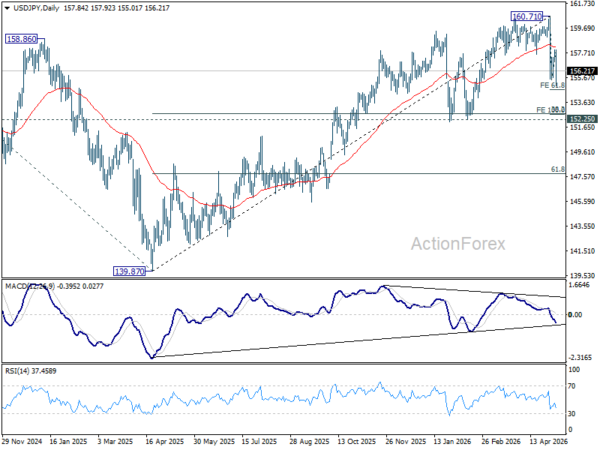
The market narrative has flipped again—and this time the reversal is dramatic. Just days after investors were positioning for a dangerous escalation in the Strait of Hormuz, traders are suddenly rushing back into risk assets as Washington signals that diplomacy may still be alive.
The turning point came when US President Donald Trump abruptly paused “Project Freedom,” the US naval operation designed to escort shipping through the Iranian-controlled Strait of Hormuz. The mission had rapidly become the center of the latest confrontation, triggering missile incidents, naval clashes, and fears that the four-week-old ceasefire between the US and Iran was collapsing.
Instead of doubling down militarily, Trump announced that the operation would be suspended to facilitate a “complete and final agreement.” That single sentence completely changed market psychology. Within hours, the focus shifted away from imminent escalation and back toward the possibility of a negotiated settlement.
In many ways, markets had already started sniffing out the shift before the announcement became official. Wall Street’s overnight rally now looks less like optimism and more like early positioning. NASDAQ and S&P 500 both closed at record highs despite the geopolitical backdrop, suggesting some traders had already concluded that Washington was preparing to step back from direct confrontation.
The clues were there. During a briefing earlier in the day, Secretary of State Marco Rubio and Defense Secretary Pete Hegseth continued to speak firmly about protecting shipping routes and maintaining “Project Freedom.” But they also repeatedly stressed that the ceasefire remained intact despite recent military skirmishes. That subtle change in tone appears to have been enough for markets to start reversing defensive positioning.
The result was a sharp unwind of the “war trade.” Oil prices retreated as traders reduced the probability of an immediate supply shock through Hormuz. Safe-haven demand for Dollar evaporated quickly, pushing the greenback back under broad pressure.
Equity markets in Asia exploded higher after the pause for formally announced. South Korea’s KOSPI delivered one of the clearest signals, opening above 7093 before surging through 7300 intraday for a fresh record. The move reflected a rapid return of global risk appetite as investors once again embraced the idea that diplomacy—not escalation—would dominate the next phase.
But the most fascinating development is happening in Yen, for it is aggressively outperforming everything else. That has reignited speculation that Japan is intervening again—this time with near-perfect timing. By acting during the tail end of Golden Week holidays, when Tokyo liquidity is exceptionally thin, authorities can move the market far more efficiently. And by stepping in while Dollar is already falling globally, they effectively gain leverage from the market’s own momentum.
This is the essence of “maximum impact for minimum spend.” Japan may have realized that this brief window—falling Dollar and global yields, thin liquidity, and reduced geopolitical fear—offered the best opportunity to reset USD/JPY lower before speculative pressure toward 160 could rebuild. Rather than fighting the market, Tokyo may now be trying to guide it.
In the currency markets, Dollar is currently the worst performer for the day so far, followed by Loonie, and then Euro. Yen is leading, followed by Kiwi, and then Aussie. Swiss Franc and Sterling are positioning in the middle.
In Asia, Japan is in the last day of the Gold Week holidays. Hong Kong HSI is up 0.79%. China Shanghai SSE is up 1.27%. Singapore Strait Times is up 0.07%. Overnight, DOW rose 0.73%. S&P 500 rose 0.81%. NASDAQ rose 1.03%. 10-year yield fell -0.03 to 4.42.
NZ Labor Data Gives RBNZ Room to Stay on Hold
USD/JPY Daily Outlook
Daily Pivots: (S1) 157.35; (P) 157.63; (R1) 158.18; More…
USD/JPY fell sharply after reject below 55 4H EMA (now at 158.06). The decline from 160.71 high is resuming and intraday bias is back on the downside for 61.8% projection of 160.71 to 155.48 from 157.92 at 154.68. Firm break there will target 100% projection at 152.69. That would be close to key 152.25 cluster support (38.2% retracement of 139.87 to 160.71 at 152.74). For now, risk will stay on the downside as long as 157.92 resistance holds, in case of recovery.
In the bigger picture, for now, corrective pattern from 161.94 (2024 high) is still seen as completed at 139.87. Rise from there is seen as resuming the long term up trend. So, break of 161.94 is expected at a later stage to resume the long term up trend. However, sustained break of 55 W EMA (now at 154.01) will dampen this view and bring deeper fall back towards 139.87 to extend the pattern from 161.94.